

How to Keep Your Mudroom Organized All Year Long
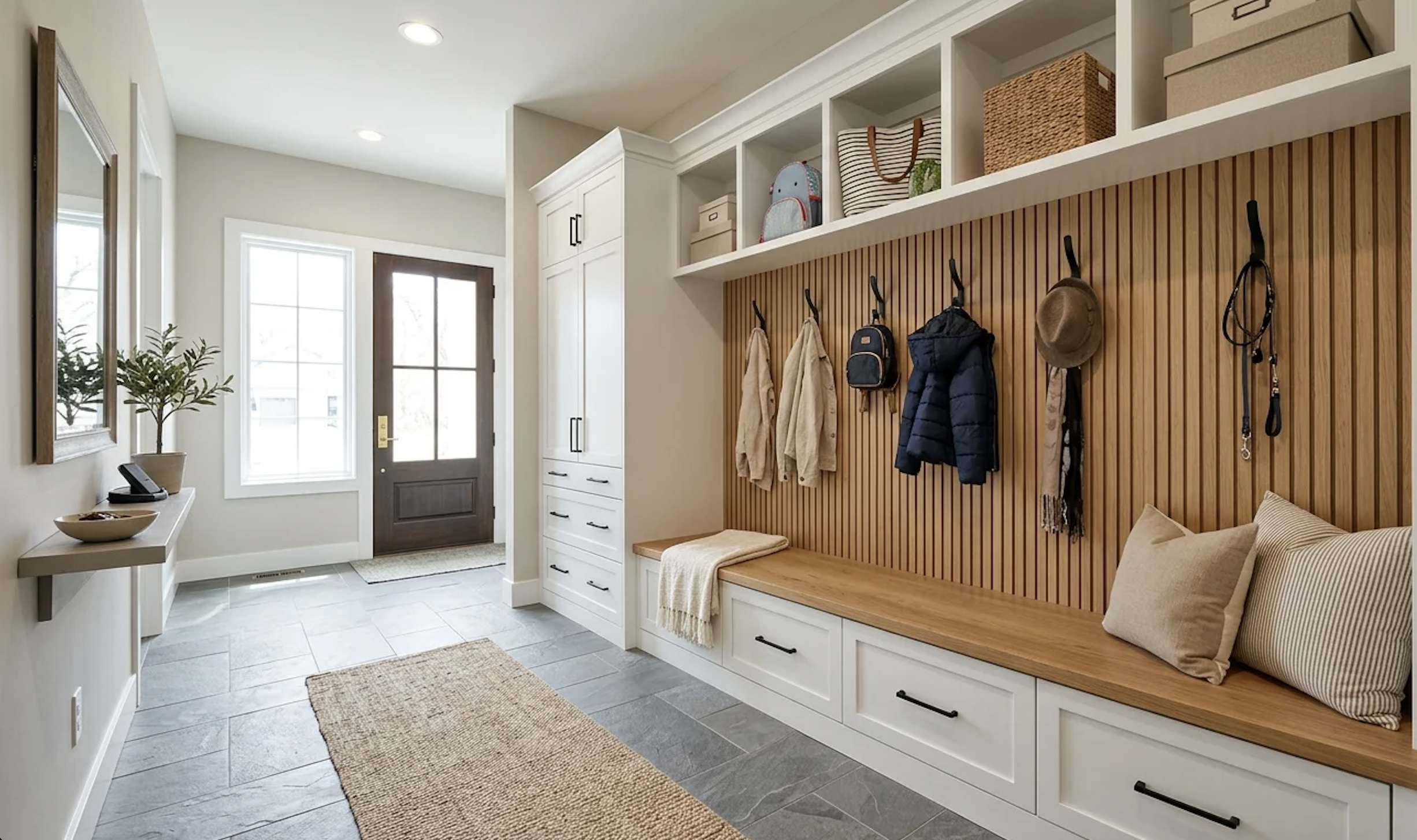
How to Keep Your Mudroom Organized All Year Long
From winter boots to summer sandals, create a mudroom that works for your family through every season.
The mudroom is one of the hardest-working spaces in your home. It's where backpacks get dropped, shoes pile up, coats accumulate, and somehow, everything that doesn't have a designated home ends up.
And if you live in Minnesota, you know that keeping an entryway organized comes with its own unique challenges. One season you're dealing with bulky winter coats, snow pants, and wet boots. The next, it's rain jackets, muddy shoes, sports equipment, and summer essentials.
The good news? Your mudroom doesn't have to be a constant source of clutter.
With a few intentional organizing systems and some seasonal maintenance, you can create a space that stays functional all year long.
1. Give Everything a Designated Home
The foundation of any organized mudroom is simple: everything needs a place to go.
When shoes, jackets, backpacks, and accessories have designated spots, it's much easier for everyone in the family to put things away instead of dropping them wherever there's room.
Start by identifying what actually needs to live in your mudroom.
Think about the items your family uses daily, such as:
Everyday shoes and boots
Coats and jackets
Backpacks, purses, and work bags
Hats, gloves, and seasonal accessories
Sports equipment and outdoor essentials
Once you've identified what belongs, create specific storage areas for each category.
Arris Tip: Keep frequently used items within easy reach and store less-used items higher up or in closed storage. The easier something is to put away, the more likely everyone is to maintain the system.
2. Create Individual Spaces for Family Members
If multiple people use your mudroom, giving each person their own designated area can make a huge difference.
Individual hooks, cubbies, baskets, or lockers help eliminate the daily guessing game of whose belongings are whose.
For families with kids, this is especially helpful. When children know exactly where their backpack, coat, and shoes belong, they can take responsibility for putting things away.
And that means fewer reminders from you!
Consider using labels or simple picture labels for younger children to make the system even easier to follow.
Arris Tip: Install hooks at a height kids can actually reach. A beautifully organized mudroom won't stay organized if the storage isn't functional for the people using it.
3. Make the Most of Vertical Space
Mudrooms aren't always large, but even a small entryway can offer plenty of storage opportunities when you think vertically.
Instead of relying entirely on floor space, look for ways to use your walls.
Hooks, shelves, wall-mounted baskets, and built-in cabinetry can help maximize storage without making the space feel crowded.
A few ideas to consider:
Hooks: Perfect for everyday coats, backpacks, and bags.
Upper shelves: Great for seasonal accessories and less frequently used items.
Baskets or bins: Ideal for containing hats, gloves, sunscreen, and other smaller essentials.
Shoe racks or cubbies: Keep footwear organized and off the main walkway.
Benches with storage: Provide a place to sit while putting on shoes and an opportunity for additional storage underneath.
The key is to use the space you have intentionally rather than trying to squeeze in as much storage as possible.
4. Rotate Items with the Seasons
One of the biggest reasons mudrooms become cluttered is that they end up holding every season at once.
Winter boots are still taking up space in July. Summer sandals are mixed in with snow gear. And that collection of jackets somehow keeps growing.
Instead of keeping everything accessible year-round, rotate your mudroom essentials as the seasons change.
Spring: Make room for rain jackets, rain boots, and outdoor play essentials.
Summer: Keep sandals, sunscreen, hats, and lightweight jackets easily accessible.
Fall: Bring out warmer layers, school backpacks, and seasonal sports gear.
Winter: Prioritize heavy coats, snow pants, hats, gloves, scarves, and winter boots.
Store off-season items in labeled bins in a closet, basement, or another designated storage area.
Arris Tip: You don't need to completely reorganize your mudroom four times a year. A quick seasonal swap is often all it takes to keep the space functional.
5. Contain the Small Stuff
It's often the smallest items that create the biggest mess.
Gloves, hats, sunglasses, keys, hair accessories, and all those little things that get dropped on the nearest available surface can quickly make a mudroom feel chaotic.
The solution? Give those items a container.
Baskets, bins, and drawer organizers help keep smaller belongings together and prevent them from spreading throughout the space.
For example, you might have:
A basket for each family member's hats and gloves
A small tray for keys and sunglasses
A bin for pet leashes and walking accessories
A designated container for seasonal outdoor items
Just remember that containers work best when they serve a specific purpose.
Arris Tip: Avoid creating a miscellaneous basket that becomes a catchall for everything. If a bin doesn't have a clear purpose, it's likely to become another clutter hotspot.
6. Plan for Wet and Dirty Gear
Let's face it. Mudrooms are called mudrooms for a reason!
Between snowy Minnesota winters, rainy spring days, and muddy outdoor adventures, your entryway needs to handle more than just everyday clutter.
Creating a designated area for wet and dirty items can help protect the rest of your home while keeping your mudroom easier to maintain.
Consider adding a durable, washable entry mat, a waterproof boot tray, or hooks where damp coats and snow gear can dry.
Make sure wet items have enough airflow to dry properly before placing them in enclosed storage.
Arris Tip: Keep a small supply of cleaning cloths or towels nearby for quick cleanup. Having what you need within reach makes dealing with muddy shoes and wet floors much easier.
7. Build in a Five-Minute Daily Reset
Even the best organizing system needs a little maintenance.
The good news is that maintaining an organized mudroom shouldn't require a major cleaning session every weekend.
A quick five-minute reset at the end of the day can make a big difference.
Take a few minutes to:
Return shoes to their designated spots.
Hang up coats and backpacks.
Put away loose accessories.
Remove items that belong in other rooms.
Clear the bench or other surfaces.
Encourage everyone in the family to participate. When putting things away becomes part of the daily routine, the clutter is much less likely to pile up.
And remember, the goal isn't to have a picture-perfect mudroom every minute of the day. It's to have a system that's easy to get back in order.
8. Design Your Mudroom Around Your Lifestyle
Here's something important to remember: an organized mudroom isn't necessarily one with the most cabinets, baskets, or hooks. It's one that works for the people who use it.
A family with young children will have different storage needs than a household with teenagers involved in multiple sports. A couple with two dogs might need more space for leashes, towels, and outdoor gear.
Before investing in new storage products or redesigning your mudroom, pay attention to how your family actually uses the space.
Where do shoes naturally end up? Where are backpacks dropped? What items are you constantly searching for on your way out the door?
Those everyday habits can tell you a lot about what your mudroom needs.
Sometimes the solution is as simple as moving a hook or adding a basket. Other times, a more thoughtful storage redesign can completely transform how the space functions.
A Mudroom That Works in Every Season
Your mudroom doesn't have to be the most beautiful room in your house, but it should make your daily life easier.
By creating designated spaces, rotating seasonal items, using smart storage solutions, and establishing a simple maintenance routine, you can turn even the busiest entryway into an organized, functional space.
And when everything has a place, getting out the door in the morning becomes a whole lot easier.
Need help creating a mudroom that actually works for your family?
At Arris Organizing and Design, we help transform cluttered, frustrating spaces into customized organizing systems that fit your home and lifestyle.
Whether you need help maximizing a small entryway, organizing your family's everyday essentials, or designing a completely new mudroom storage system, we'd love to help.
Because great organization isn't just about how a space looks.
It's about making space for what matters.