

What Professional Organizers Wish You’d Stop Buying
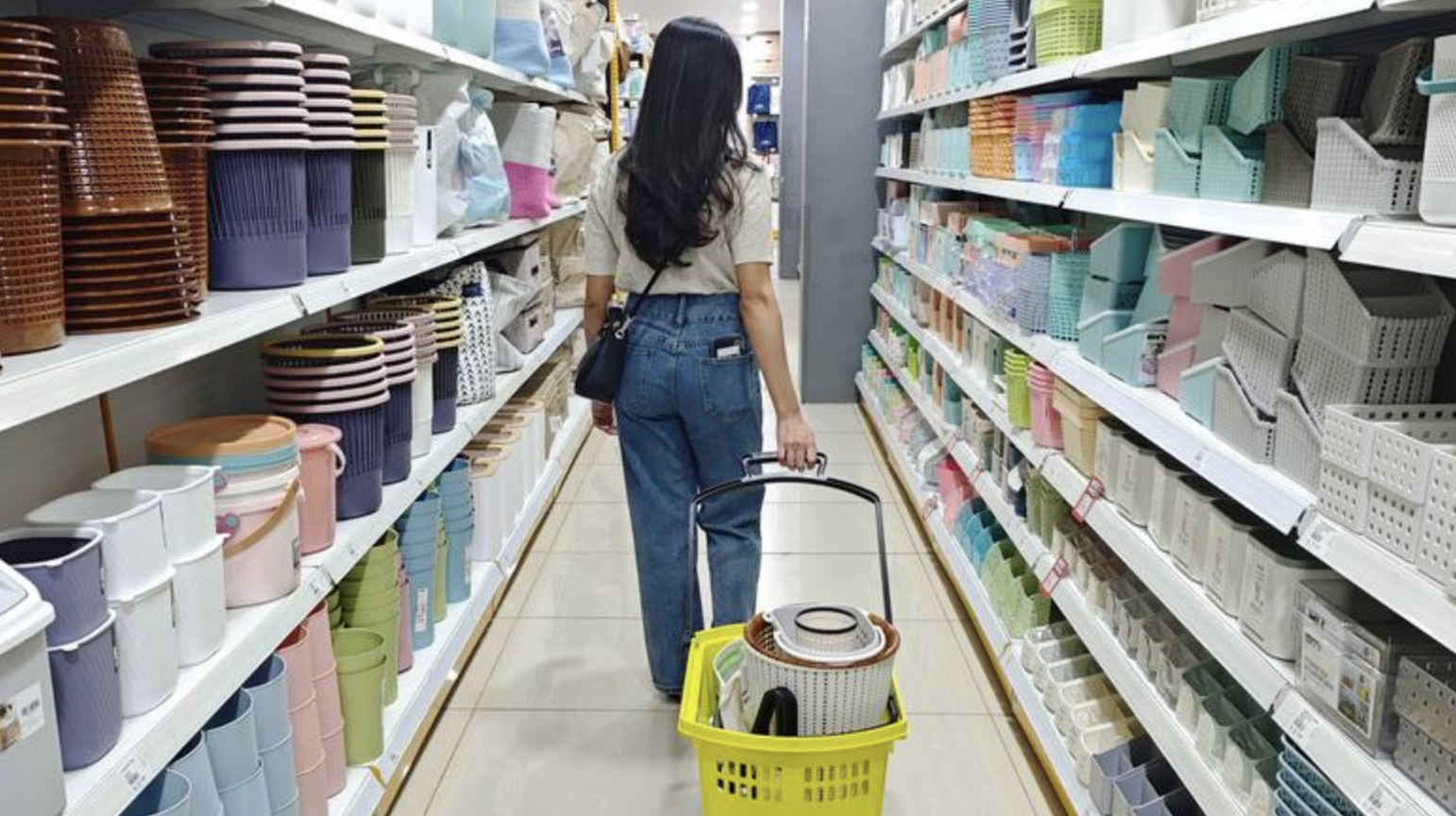
As a professional organizer, I love a good bin.
Clear containers, matching baskets, drawer dividers, labels... the right products can completely transform a space.
But here's the part people don't always expect: buying more organizing products isn't always the answer.
In fact, sometimes the things you're buying to get organized are actually creating more clutter.
Before you add another basket to your cart, here are a few things professional organizers wish you'd stop buying.
1. Organizing Products Before You Declutter
This is probably the biggest one.
It's tempting to start an organizing project by heading straight to the store for beautiful bins and baskets. But until you know what you're actually keeping, you don't know what you need to contain.
You may buy six bins only to discover that after decluttering, you need three.
Or you may choose containers that don't fit the items you're keeping at all.
Declutter first. Organize second. Buy products last.
That's also why I measure spaces and plan products carefully when I'm working with clients. The product should solve a specific problem, not become another thing we need to find a home for.
2. Bins and Baskets Without Measuring
Just because a basket is cute doesn't mean it belongs in your pantry.
A few inches can make the difference between a beautifully functioning system and a bin that wastes half the shelf.
Before buying containers, measure the width, depth and height of your space. Don't forget to account for things like hinges, shelf supports and doors that may affect how easily you can pull a container out.
And then think about what is actually going inside the container.
A bin needs to fit both the space and the stuff.
3. Huge Bins for Small Categories
Bigger isn't always better.
An oversized basket often becomes permission to keep more. Instead of containing a category, it turns into a catch-all.
Suddenly the basket labeled "Kids' Crafts" contains markers, school papers, stickers, random toys, three glue sticks without caps and something nobody can identify.
Choose a container that's appropriately sized for the category.
Sometimes a physical boundary is exactly what helps keep a category under control.
4. Highly Specific Organizers
There is an organizing product for practically everything now.
Tea bag organizer? Yep.
Water bottle organizer? Of course.
A container specifically designed to hold the lids for your food storage containers? Absolutely.
Some of these products are fantastic when they solve a real problem in your home.
But the more specific an organizer is, the less flexible it becomes.
Whenever possible, I prefer products that can evolve with your home. A simple clear bin might hold snacks today, baking supplies next year and craft supplies five years from now.
Good organizing products should be able to adapt.
5. Matching Containers Just Because They Look Pretty
I love a beautiful space. I'm an organizer and designer, after all.
But function always comes first.
Those perfectly matching baskets on Pinterest may look incredible, but if you can't see what's inside, they're difficult to access or they don't fit your shelves well, they aren't helping you.
The goal isn't to make your home look like a showroom.
The goal is to create a home that's easier to live in.
When something can be beautiful and functional? That's the sweet spot.
6. Bulk Items You Don't Have Room to Store
Buying 24 rolls of paper towels might be a great deal.
But if you don't have anywhere to put 24 rolls of paper towels, you've just purchased clutter.
Bulk buying makes sense when:
You regularly use the product
The savings are worthwhile
You have designated storage for the extras
If the overflow ends up sitting on the pantry floor, taking over the laundry room or being shoved into three different closets, the bargain may not be worth the space it's costing you.
7. Single-Purpose Kitchen Gadgets
If you use your avocado slicer every morning, keep it.
But many kitchens are overflowing with gadgets designed to accomplish one very specific task.
Before buying another one, ask yourself:
Do I already own something that can do this?
And even more importantly:
Will I actually use this enough to justify the space it takes up?
Cabinet and drawer space is valuable. Save it for the things you actually use.
8. More Stuff Because You Have an Empty Space
An empty shelf does not need to be filled.
Neither does an empty drawer.
Neither does that little corner of your basement.
One of the best things you can give yourself when organizing is breathing room.
Leaving some open space makes it easier to see what you own, put things away and accommodate new items when they inevitably enter your home.
You don't need to maximize every square inch.
Before You Buy, Ask Yourself This
The next time you're about to buy something for your home, especially an organizing product, ask:
What problem is this solving?
If you have a clear answer, great.
If the answer is something like, "I don't know, but it's cute and I feel like I could use it somewhere..."
Maybe leave it at the store.
Getting organized isn't about owning the perfect collection of containers.
It's about intentionally deciding what deserves space in your home and creating simple systems that make those things easier to use and put away.
Buy less. Choose intentionally. And when you do bring organizing products into your home, make sure they're working for you, not the other way around.
Need help figuring out what products actually make sense for your space? Arris Organizing and Design can help you declutter, organize and create functional systems designed specifically for your home.